Key Takeaways
- Private pilot training typically takes between a few months to a year, depending on consistency and frequency of lessons.
- Students need to log at least 40 hours of flight time and can benefit from training that aligns with their real-life schedules.
- Training locally in Utah offers advantages like convenience, familiarity with local weather, and building aviation community connections.
- Consistency is key; flying two to three times a week and studying between lessons can expedite the training process.
- Choosing a supportive flight school that understands your goals greatly impacts your success in private pilot training.
read more
Private Pilot Training in 2026: How Long Does It Really Take?
If you have been searching for private pilot training, chances are you are asking one big question before anything else: how long does it take to become a private pilot in 2026?
It is a smart question, and it is one that almost every future pilot asks before taking that first lesson. Whether you are just starting to explore aviation, comparing a pilot academy to a more flexible local option, or typing flight school near me into Google, you want a clear picture of the timeline, the commitment, and what the path actually looks like.
The short answer is, most students can expect private pilot training to take anywhere from a few months to about a year, depending on how often they fly, how consistently they study, and how well their training schedule fits into real life.
The FAA minimum for a private pilot certificate under Part 61 is 40 hours, but most students finish with more than the minimum. That is normal. Becoming a safe, confident pilot is about more than checking a box. It is about learning how to think like a pilot, make good decisions, and fly with skill and consistency.
At Nightline Air, we believe students do best when training aligns with real life rather than fighting against it. If you are looking for a flight school in Salt Lake City, Utah, the right fit is not just about where you train. It is about whether you can train consistently enough to finish efficiently.
The Real Timeline for Private Pilot Training in 2026
When people begin researching private pilot training, they often expect there to be one standard answer. In reality, your timeline depends on a few major factors:
- How often you fly
- How quickly you build skills
- Weather and scheduling
- Aircraft and instructor availability
- How consistently you study between lessons
That said, here is a realistic range for most students:
Fast-track pace: 2 to 4 months
This is possible for students who train multiple times per week and stay highly consistent with both flight lessons and study.
Steady pace: 4 to 8 months
This is one of the most common timelines for students who fly two to three times per week and balance training with work, family, or school.
Flexible pace: 8 to 12 months or more
This is common when students train less often or have longer gaps between lessons.
So if you are comparing options like a national pilot institute, a structured pilot academy, or a local flight school, it helps to remember this: the best timeline is usually built on consistency, not just speed.
What the FAA Requires for a Private Pilot Certificate
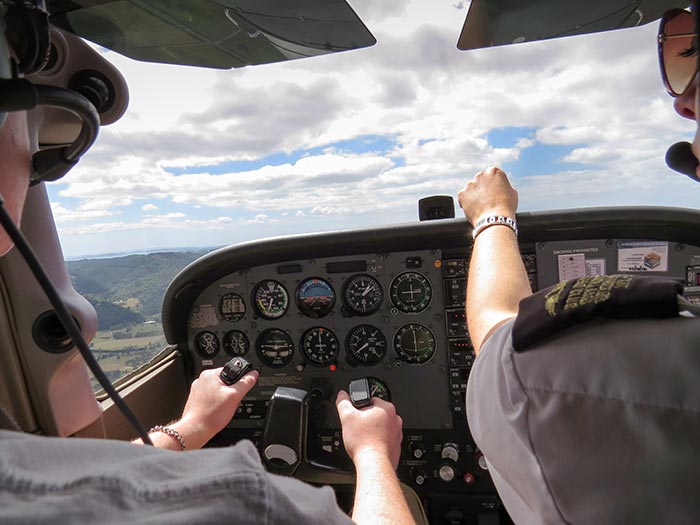
To earn a private pilot certificate, you have to meet FAA requirements for age, flight experience, knowledge, and testing.
For airplane training, you must be at least 16 years old to solo and 17 years old to earn the private pilot certificate. You also need to be able to read, speak, write, and understand English.
Under Part 61, private pilot applicants must log at least:
- 40 hours of flight time
- 20 hours of flight training with an instructor (included with your 40 hours of flight time)
- 10 hours of solo flight time
That training also includes specific requirements like cross-country flying, night flying, and basic instrument training.
But here is what matters most for future students to understand: meeting the minimum is not the same as being ready. Most students need additional time to build confidence, polish their landings, improve radio communication, and prepare for the checkride.
That is why a school that helps you progress steadily can be more valuable than one that only advertises the legal minimum.
Why Some Students Finish Faster Than Others
Two students can start at the same time and finish months apart. Why?
The biggest reason is training frequency.
Flying once every week or two can slow progress because each lesson begins with some review. Flying two to three times per week tends to create much better momentum. Skills stick better. Confidence builds faster. Lessons connect more naturally.
That means the real secret to finishing sooner is not finding a flashy pilot academy with big promises. It is about finding a training approach that fits your schedule well enough to stay consistent.
For many adults, working professionals, and busy parents, flexibility matters. A rigid schedule may sound efficient in theory, but if it is hard to maintain, it can actually slow you down.
Part 61 vs. Pilot Academy Programs
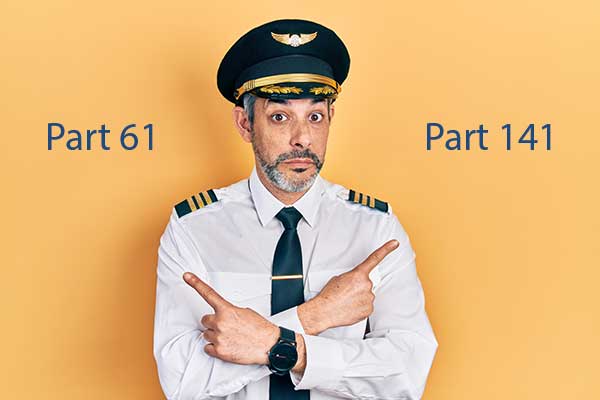
If you have looked into flight training before, you have probably seen schools described as either Part 61 or Part 141.
Part 141 programs are typically more structured. They often appeal to students who want a highly formal system and can follow a set schedule. Some large schools market themselves like a pilot academy, with a packaged training path and a more institutional feel.
Part 61 training is different. It gives instructors and schools more flexibility to tailor the pace and structure of training to the individual student. That can be a major advantage if you are balancing aviation with a job, family responsibilities, or other commitments.
At Nightline Air, that flexibility is one of the biggest strengths of our training approach. We understand that not every student can train in a rigid, full-time environment. Many of our students are looking for a practical, supportive path that helps them make steady progress without putting the rest of life on hold.
If you have been comparing a pilot institute, a national academy-style school, or a flight school in Salt Lake City, Utah, this is something worth paying attention to. The right environment is the one that helps you keep showing up.
What the Private Pilot Training Process Looks Like
The path to your private pilot certificate consists of several stages. Understanding them can make the whole process feel much more manageable.
1. Discovery flight
This is often where everything begins. You get in the airplane, meet an instructor, experience flight for yourself, and start to picture what training could look like.
2. Student pilot and medical steps
Before soloing, you will need the appropriate student pilot and medical documentation. Many students handle this early in training so they can move forward without delays.
3. Early flight lessons
This is where you learn the fundamentals: takeoffs, landings, climbs, descents, turns, checklists, traffic pattern work, and aircraft control.
4. Solo flight
One of the biggest milestones in all of flight training is your first solo. It is a moment students never forget, and it is a major confidence-building step.
5. Cross-country training
This is where flying starts to open up. You learn navigation, route planning, and real-world decision-making as you fly beyond the local airport environment.
6. Written exam and checkride prep
As your skills improve, you will also prepare for the FAA written knowledge test and eventually the checkride, which includes both an oral and flight portion.
7. Private pilot checkride
This is the final step. Pass the checkride, and you earn your private pilot certificate.
Each student moves through these stages at a different pace, but the students who stay involved and keep momentum tend to finish more efficiently.
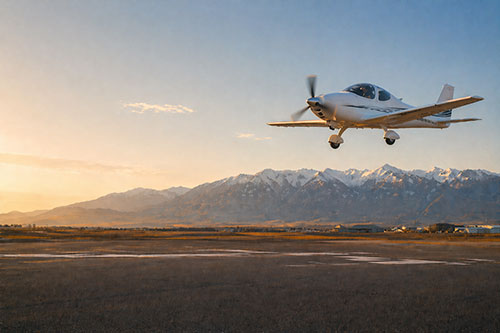
Why Training Local in Salt Lake City, Tooele, or Ogden Can Be a Smart Choice
When people search for a flight school near me, they are usually thinking about convenience. That matters, but it is not the only benefit of training close to home.
If you are looking for a flight school in Utah, local training can make a big difference in both your experience and your timeline.
1. It is easier to fly consistently
The closer your school is to your home or work, the easier it is to keep lessons on the schedule. Convenience helps reduce cancellations and missed opportunities.
2. You train in the environment where you will actually fly
Utah offers a unique and valuable training environment. You gain experience with local weather patterns, airspace awareness, and real-world operating conditions that can make you a stronger pilot.
3. You build connections locally
Training at a local school means becoming part of a local aviation community. That matters more than many students realize. It is not just about getting a certificate. It is about building relationships, confidence, and opportunities for the future.
At Nightline Air, we believe students benefit from learning in the local environment with instructors who understand the area, the pace of training, and the needs of Utah students.
What to Look for in a Flight School
If you are trying to choose between a pilot academy, an online pilot institute, or a local flight school near me, here are a few questions to ask:
1. Does the school fit your schedule?
A school can look great on paper, but if it is hard to schedule lessons consistently, your training may drag out longer than necessary.
2. Do the instructors focus on student progress?
Good instruction is not just about logging hours. It is about helping students build skills, confidence, and forward momentum.
3. Does the environment feel supportive?
The best schools do not just teach. They encourage. They guide. They help students stay motivated when the process feels challenging.
4. Is the location practical?
When training is easy to get to, it is easier to stay committed.
5. Does the school understand your goals?
Some students want to fly for fun. Some want to travel with family. Some may later pursue an instrument rating, a commercial pilot license, or airline career goals. Your school should understand what you are working toward.
At Nightline Air, we know that many prospective pilots are not looking for a one-size-fits-all program. They are looking for a clear, supportive path into aviation.
How to Finish Faster Without Rushing the Process
Everyone wants to know how to become a private pilot sooner, but there is a difference between moving efficiently and rushing.
The best way to shorten your timeline is to train smart.
1. Fly two to three times a week if possible
This is one of the best ways to build momentum.
2. Study between lessons
Ground knowledge supports flight skills. Students who prepare outside the airplane often make faster progress in the airplane.
3. Come ready for each lesson
Review what you worked on last time and know what you are focusing on next.
4. Stay engaged even when the weather causes delays
Weather happens. Students who keep studying and stay mentally involved tend to bounce back faster after canceled lessons.
5. Choose a school that helps you maintain continuity
A consistent training flow matters. It can make the difference between finishing in months and stretching into a year or more.
Is a Pilot Academy the Best Option?
For some students, a highly structured pilot academy may sound appealing. It can offer a formal path and a packaged experience. But that does not automatically make it the best option for every student.
In fact, many future pilots do better in a local training environment where instruction is more personalized, and scheduling is more flexible.
If you are in Utah and searching for private pilot training or a flight school in Salt Lake City, Utah, it is worth considering whether a local school might actually be the better fit. A school that knows the area, understands local students, and works with your real schedule can make training more practical and more sustainable.
That is especially true for students who are learning while managing work, school, or family responsibilities.
Why Students Choose Nightline Air
At Nightline Air, we know future pilots are not just looking for information. They are looking for a place to start.
They want a flight school that is local, approachable, professional, and committed to helping them move from “I’ve always wanted to do this” to “I’m actually doing it.”
That is what strong private pilot training should do.
We are proud to serve students looking for a flight school near me in West Jordan, Tooele, Ogden, or Salt Lake City, Utah. We believe flight training should be clear, encouraging, and realistic. You should know what to expect, understand your timeline, and feel supported at every stage of the process.
If you are comparing options, here is what we would encourage you to do: do not just look at the biggest promises. Look at the environment where you will actually learn best.
So, How Long Does It Take to Become a Private Pilot in 2026?
For most students, the answer is somewhere between a few months and about a year, with consistency being the biggest factor.
If you train regularly, stay involved, and choose the right school, you can make excellent progress. If training is too infrequent or your schedule is difficult to maintain, the process usually takes longer.
The good news is that becoming a private pilot is absolutely achievable for motivated students in 2026. You do not need to put your whole life on hold. You just need a smart plan, quality instruction, and a school that helps you keep moving.
If you are ready to begin private pilot training, stop wondering how long it takes and take the first step: schedule a discovery flight.
Ready to Start Private Pilot Training in Salt Lake City?
If you are looking for a flight school near me or a trusted flight school in Salt Lake City, Utah, Nightline Air is here to help you get started.
Whether you are still exploring your options or ready to book your first lesson, our team can help you understand the process, map out a training plan, and take the next step toward becoming a pilot.
Your future in aviation starts with one decision – and there is no better time than now to begin!